Karjalanpiirakka is one of my favorite Finnish foods. They are small pasties made with rye crust and filled most commonly with rice. Another variant can be potato, barley, carrot, bilberry, lingonberry, or even rutabaga..
This is how Wikipedia describes Karelian pasty:
Filled pie-type pastries are known across an area ranging from Finland to China. The open and oval shape of Karelian pastries began to be called “karjalanpiirakka” to distinguish them from other pastries made elsewhere. The current form of Karelian pastries has been baked since the 17th century in the present Eastern Finland region, from where it has spread, including with the resettled Karelian population, throughout Finland and beyond. The first written records of Karelian pastries date back to 1686.
The first signs of barley cultivation in Finland date back to 4200 BCE. Potato cultivation began in Finland in the late 1720s.Rice was imported to Finland as early as the 17th century, but only wealthy aristocrats could initially afford it. Even in the 19th century, rice porridge was a rare festive dish. During the 1800s, rice became available in rural stores and gradually reached ordinary citizens as well.
Karelian pasties, Karelian pies or Karelian pirogs (Karelian: kalittoja, singular kalitta; Olonets Karelian: šipainiekku; Finnish: karjalanpiirakat, singular karjalanpiirakka;or Swedish: karelska piroger) are traditional Finnish pasties or pirogs originating from the region of Karelia. They are eaten throughout Finland and in adjacent areas such as Estonia and Russian Karelia.
The oldest traditional pasties usually had a rye crust, but the North Karelian and Ladoga Karelian variants also contained wheat to improve the quality of the crust. The usual fillings were barley and talkkuna (Talkkuna is a traditional Finnish dish made from roasted and ground whole grains, typically barley or oats. The grains are roasted until they turn brown and then ground into coarse flour. Talkkuna can be used in various ways, such as mixing it with milk or yogurt, or it can be sprinkled over porridge or desserts. The resulting mixture is often nutritious and provides a unique, hearty flavor. It is a traditional and versatile element in Finnish cuisine.)
In the 19th century, first potato, and then buckwheat were introduced as fillings, and later, boiled rice and millet.
Today, the most popular version has a thin rye crust with a filling of rice. Mashed potato and rice-and-carrot fillings are also commonly available. Butter, often mixed with chopped-up boiled egg (egg butter or munavoi), is spread over the hot pasties before serving.
Karelian pasties have had traditional specialty guaranteed (TSG) status in Europe since 2002. This means that any producer not following the traditional recipe cannot call them karjalanpiirakka and instead, will have to call them riisipiirakka ‘rice pasties’, perunapiirakka ‘potato pasties’ (potato variant was called “Kakkara” in my family.) etc., depending on the filling.

I have always been eating Karelian pies, mostly industrial-made, but my Stepmother changed all that! She’s Karelian (her parents came from Karelia as refugees after Karelia was annexed to Russia after Second WW was over.
Making pies, has always been social event in our family. Ladies in the kitchen, talking, baking and yep..Drinking sparkling wine.It has been something that brought generations together.
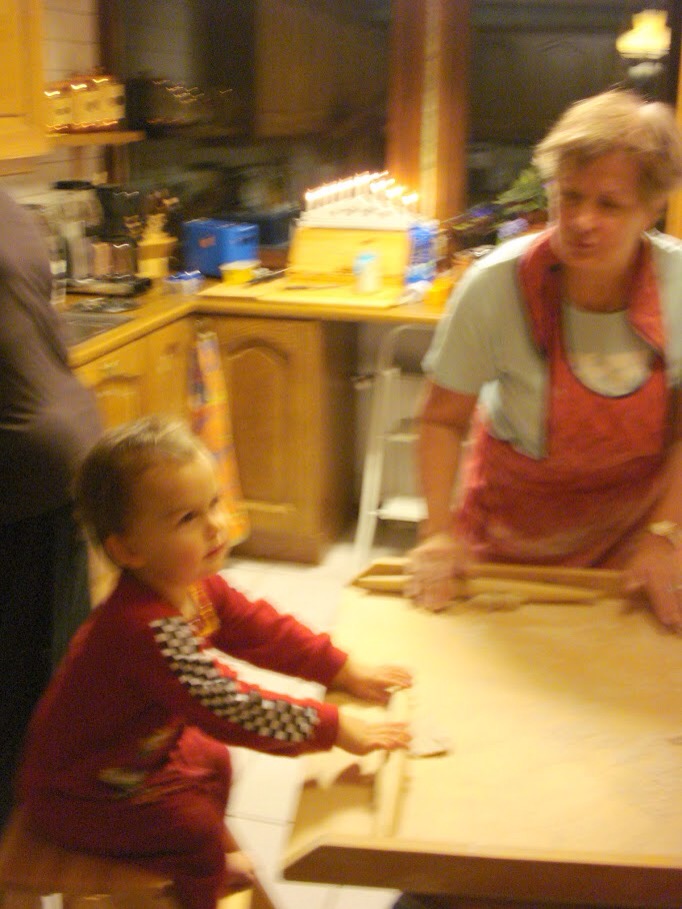
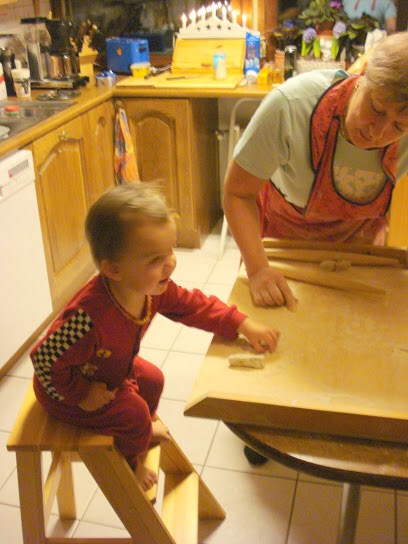
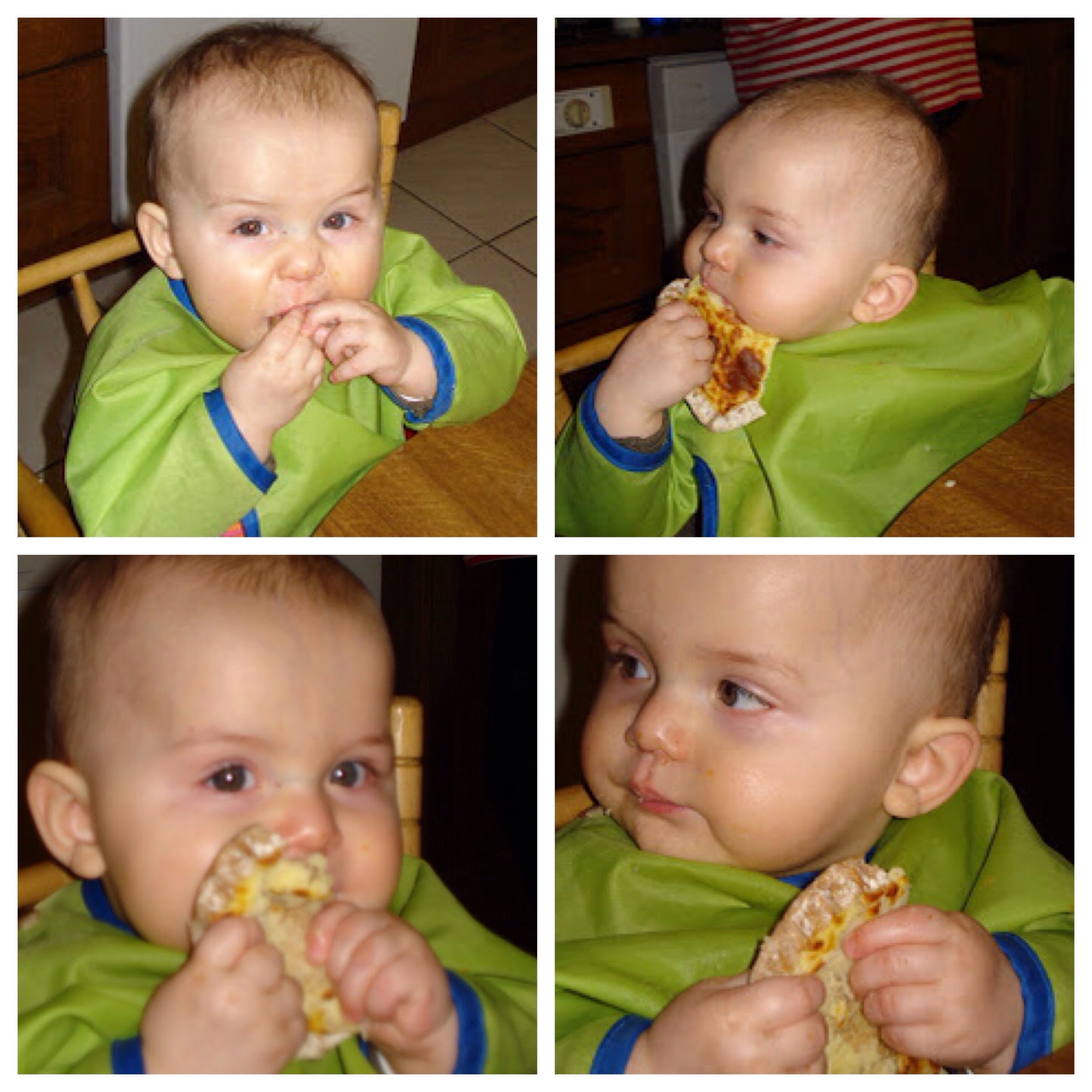
My son was half a year old when he ate his first Karelian Pie with gusto. Sitting in his high chair, over at his grandmother’s house, surrounded by his family. Ladies are baking Karelian pies, and Kiddo is in the middle.
Nowadays, he bakes Karelian pies with me. I am trying to move tradition to him.
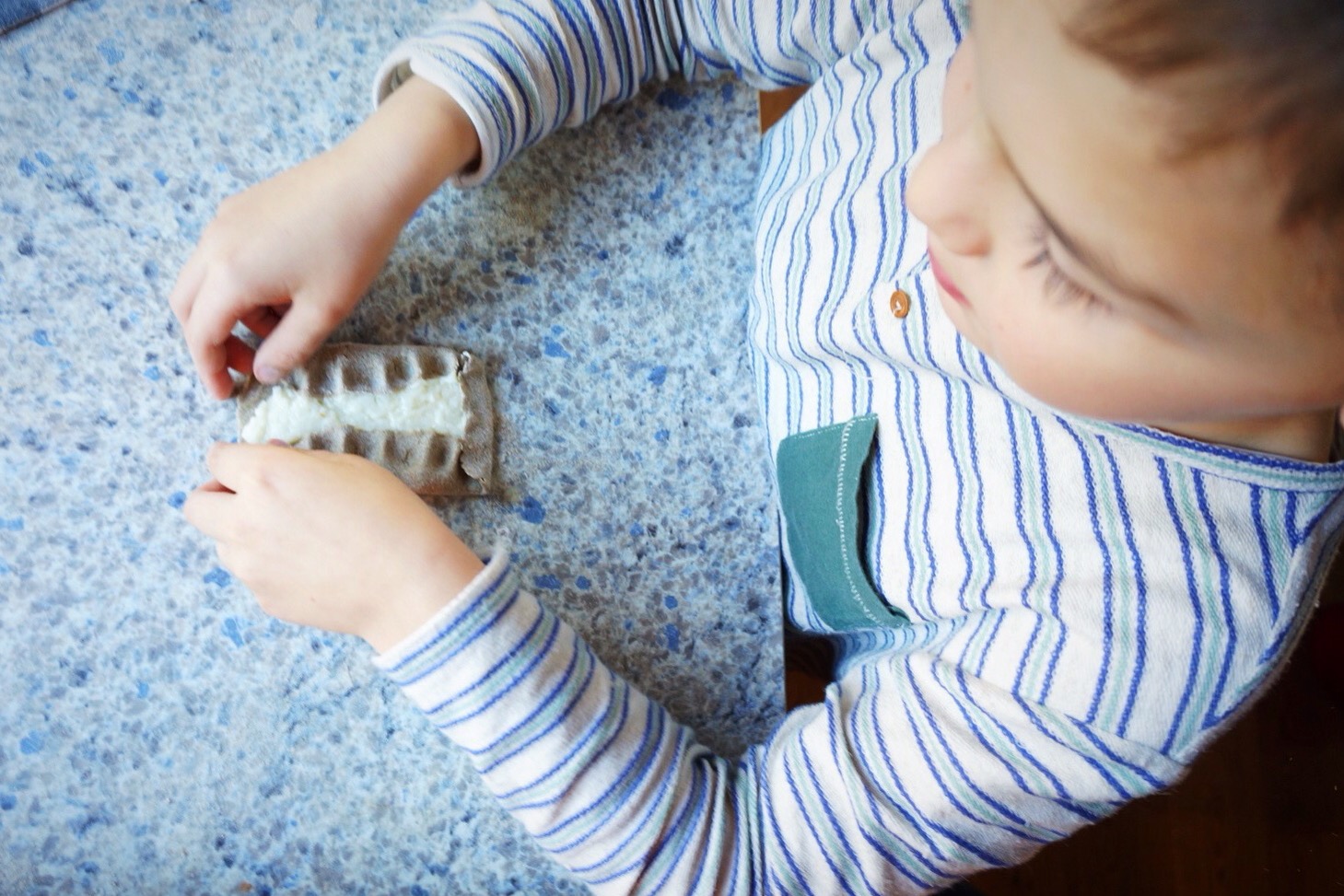
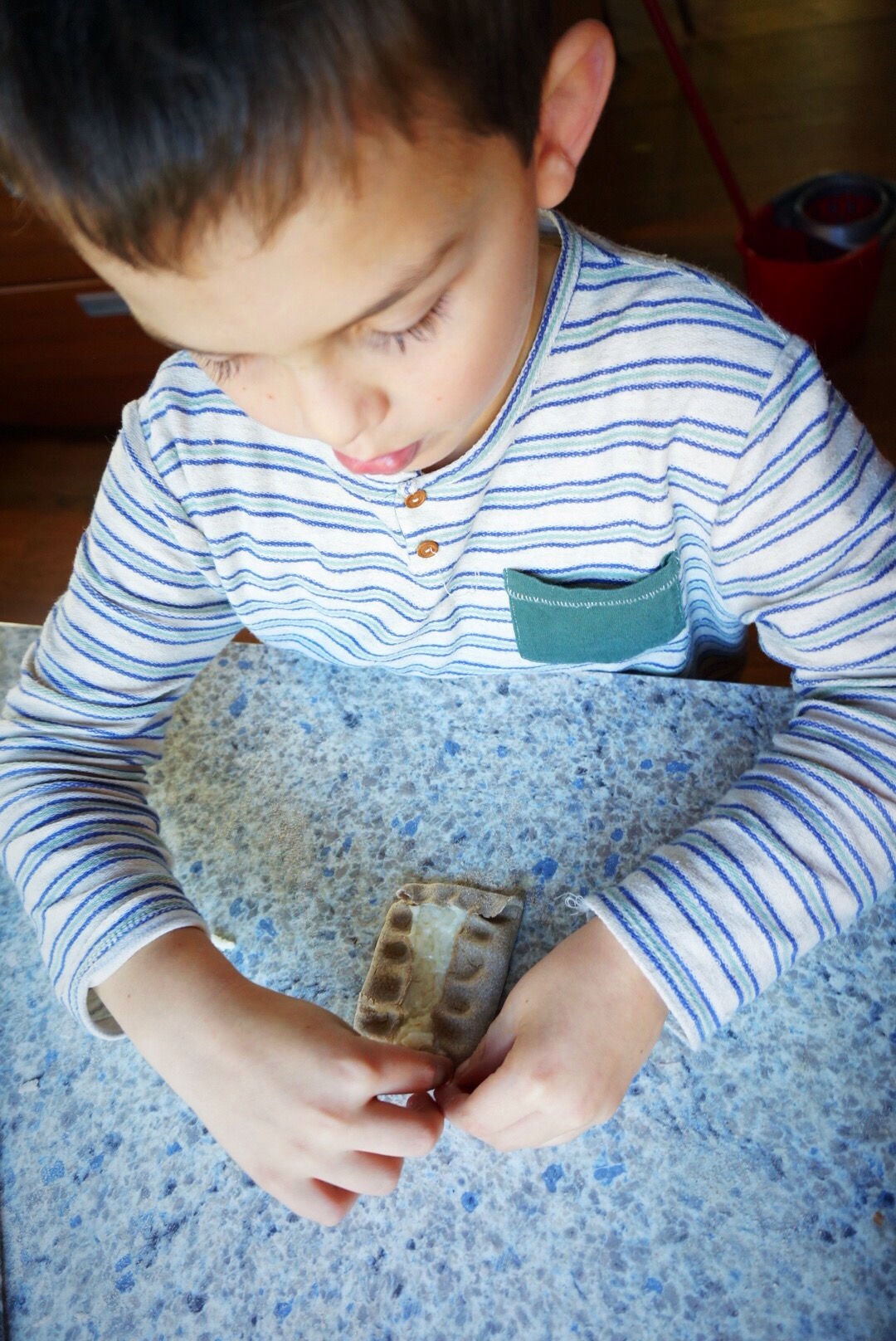
His pies are not pretty, but they taste good and with every patch he makes, he is learning more.
This is a time-consuming recipe and can be frustrating for the beginner.A recipe that many Finns themselves are afraid of to try out. Don’t be afraid! I have done this with Austrians in my cooking classes several times, and they really liked Karelian Pies. Also, making them was fun! It is even more fun when you have a group of people together and you make a social event out of it.
They are actually straightforward to make. Looks don’t matter; taste does! Ingredients are straightforward.You will need rye flour, water, porridge rice (risotto or paella rice will do, too), milk, salt, and butter. Good nerves for the first time making pies.
At the end of this posting, I will attach a video on how to make Karelian pies. It is pretty long and in Finnish, but it explains very well how these lovely savory pies are made!
So, let’s start baking! This is how it is done:
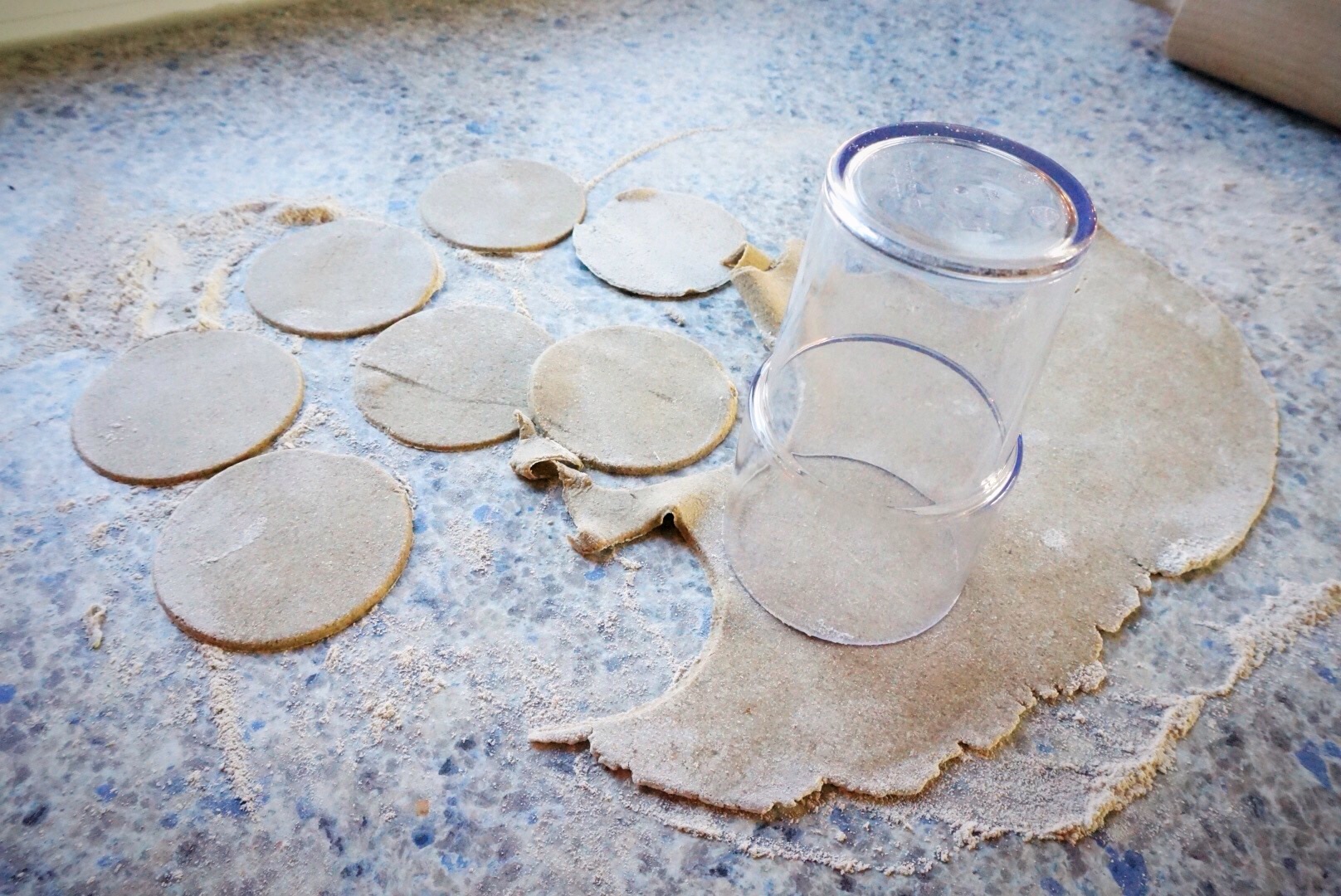
1. Roll the dough on a floured surface until about 2 mm thick. Using a cutter or cup, cut into circles of 8 cm in diameter. NOTE: I am doing this differently from the traditional recipes because I have noticed this has been the easiest way to make rawlings with people who don’t know how to use traditional Finnish rolling pin “pulikka” to make these crusts.
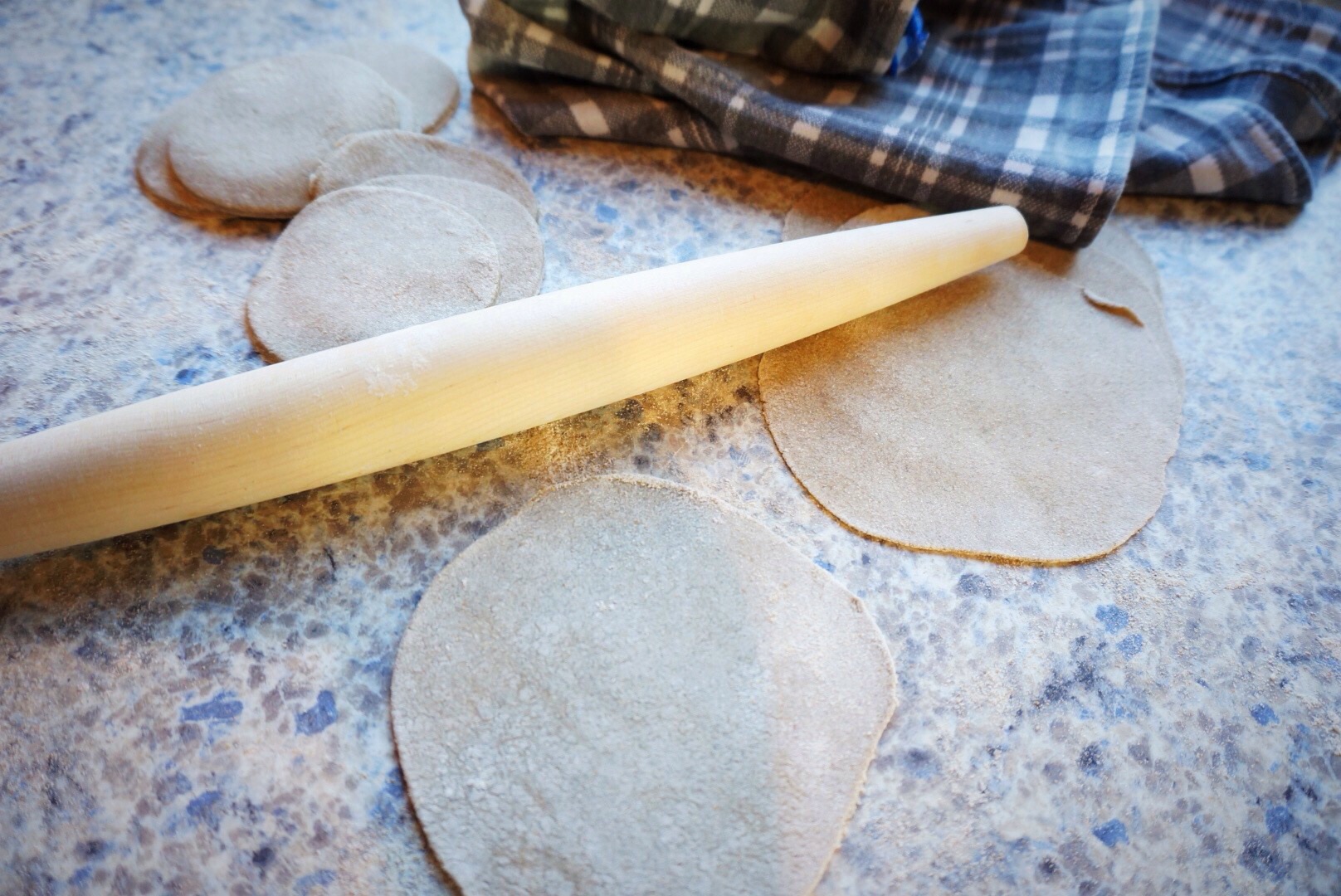
2. With your “pulikka” or rolling pin, roll the circles into thin crusts about 12cm in diameter. Use some flour to help with the rolling. Keep on turning your crust while rolling it so that it will keep its round shape. Cut and roll ALWAYS only the amount that you can work at once. I can fit 12 pies for baking on my oven sheet, so this is the number of rawlings I always make.
Pasta machine can also be used to do this. When using the pasta machine, start with the largest setting and work with the crust until it is thin enough.
NOTE: Rye dough dries very fast; when it is dry, it is nearly impossible to work with. Dried up dough is usually the reason why you Karelian Pies end up looking not so nice. I keep my spare dough in a bowl, covered with a towel, and all rawlings under a tea towel while continuing to roll and fill them.
3. Fill the crusts with a thin layer of rice mixture. Use two spoons to lift the filling on your crust. The right amount of the filling is one soup spoon.
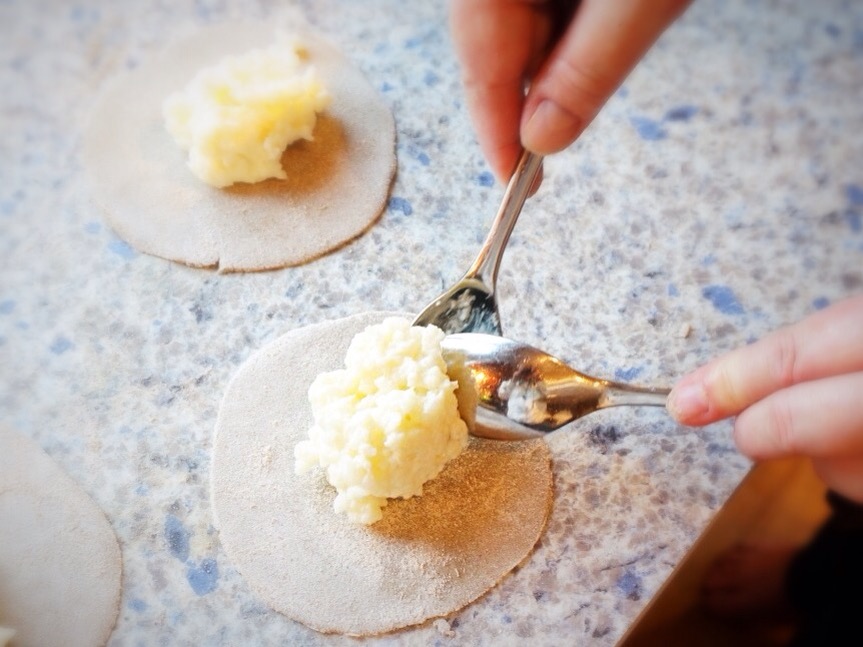
4. Use a wet knife to spread porridge from MIDDLE to the sides. Leave a half centimeter free from the edge.
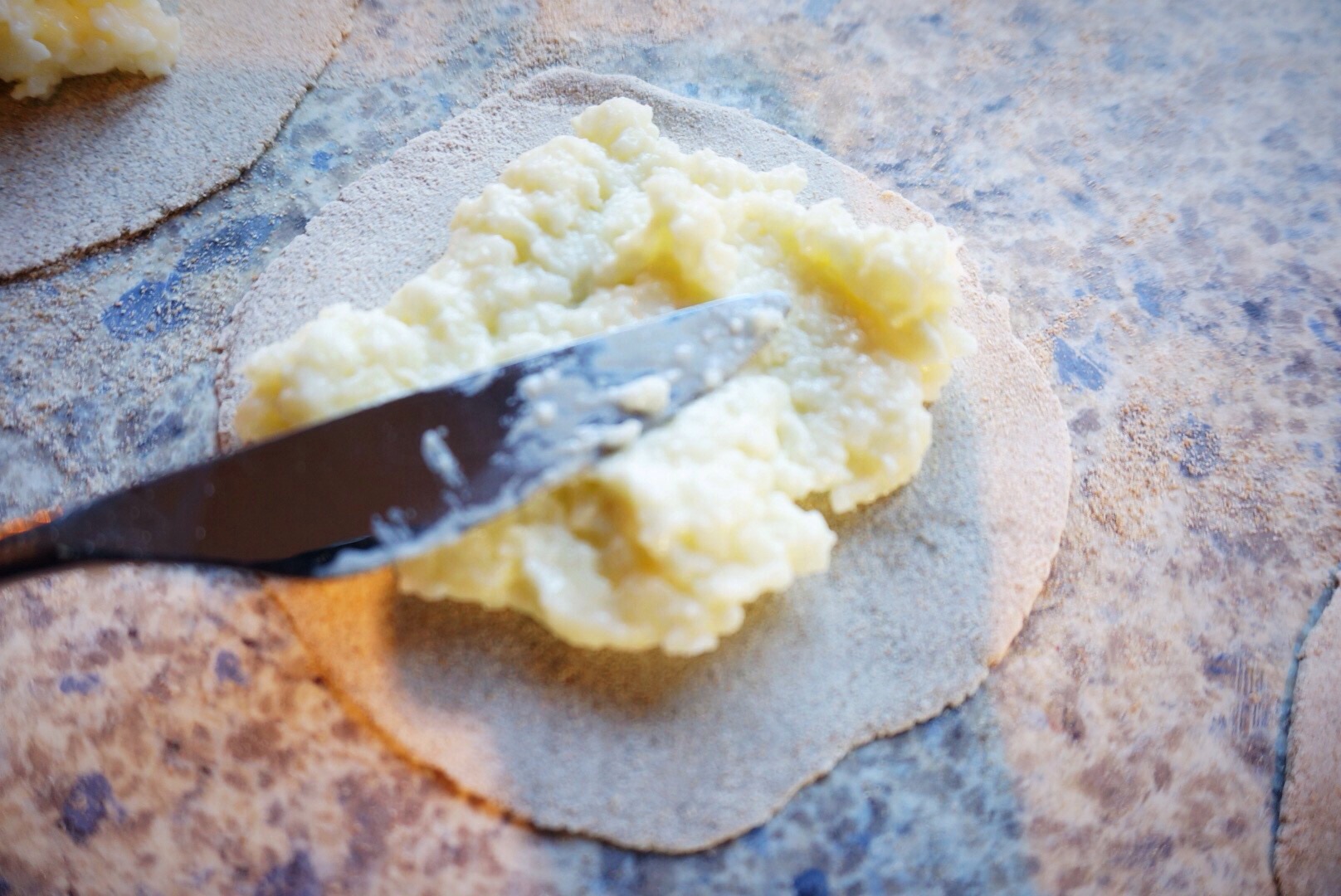
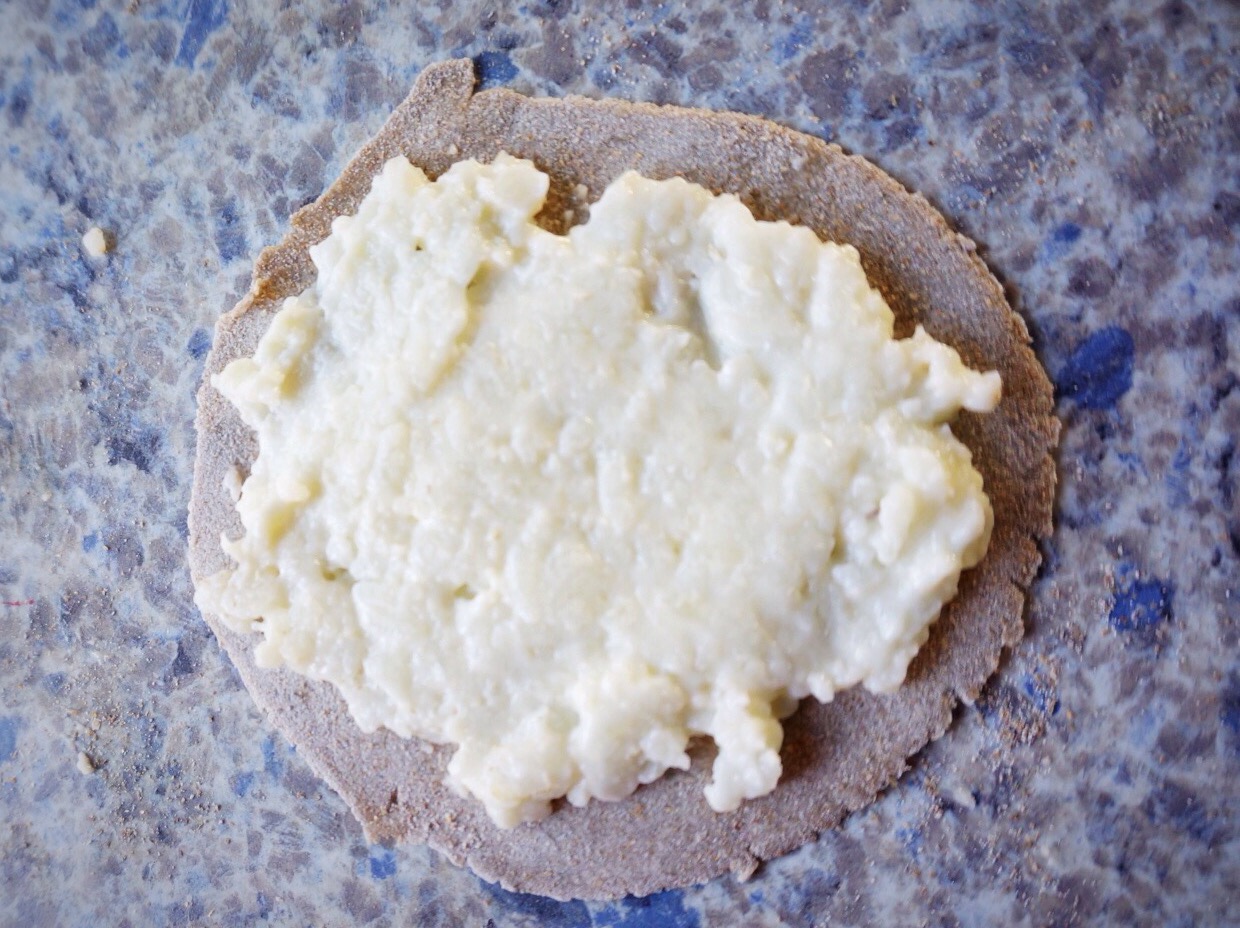
5. Turn 1 cm of the side to create an edge and pinch the edges. Use your thumb and forefinger to do this. Move along the pie, pinching to the middle, and turn the pie around. Do the same thing starting from the end. Do not leave pitched edges too high because they will burn in the oven! Lift your pie on a baking sheet and continue filling the rest.
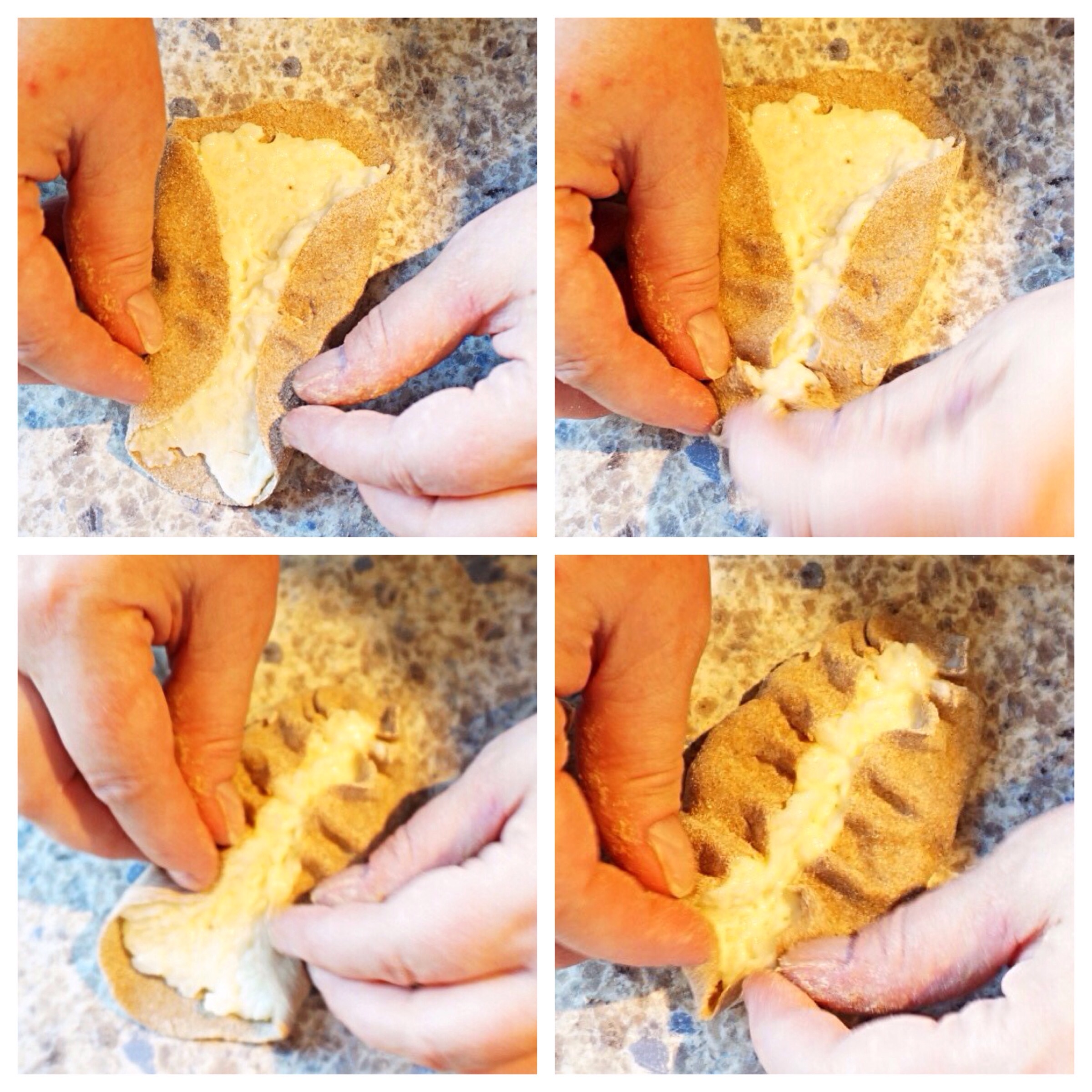
6. You should try to make your oven as hot as you can heat it up. I bake mine at 300°C for 15-20 minutes. 275c should be sufficient. They are done when the bottom of your pie has browned a bit, and your porridge has taken a little color. NOTE: Thicker your porridge filling is longer than the Karelian Pies will take to bake!
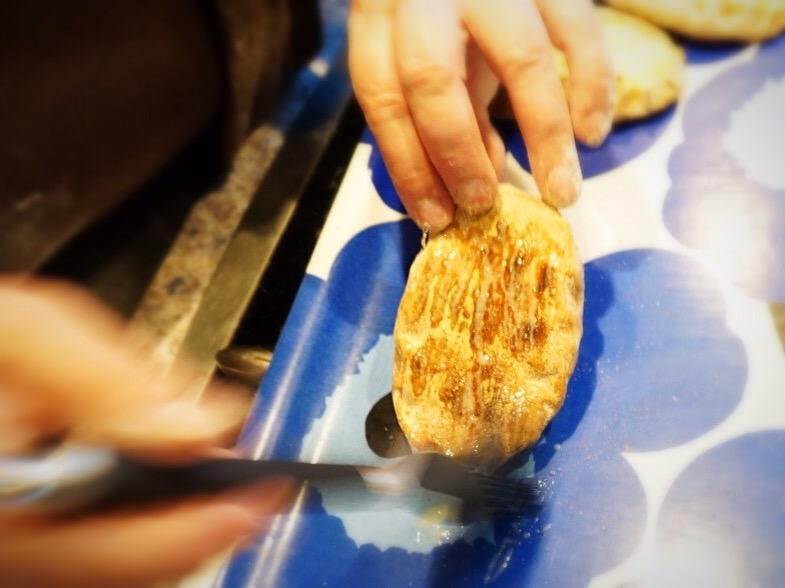
7. Brush lightly with butter from both sides and transfer to soften under the greaseproof paper and a tea towel.
Enjoy and eat with the egg butter spread!
By the way..These freeze very well..You can serve them with various toppings, and Karelian Pies are perfect as snacks for kids!
Karelian PiesMakes about 36 Rice porridge:
Rye dough:
To glaze:
Egg and butter spread:
|
| The Porridge
Put the water and butter into a saucepan. Bring to the boil and stir in the rice. Simmer for 10 minutes, stirring occasionally. Add the milk and stir until boiling.Be careful now! Porridge can burn quickly!! Whatever you do, do not leave the porridge alone. Keep on stirring. Simmer for about 50 minutes until the rice is done. Season with salt. Set aside to cool. When cooled down, stir in one egg. Check the saltiness and add more if needed. If the porridge is too thick, add a little milk to make it easier to work with. The dough I use organic whole-grain rye flour. This is important because Finnish rye flour used for Karelian pies is coarse. If you use too fine rye flour, your dough will be difficult to handle. Mix flour, salt, and water together. Knead it into a dough. Use a kitchen machine or mix it by hand. Always make an amount of dough that you can use at once. The dough dries very fast, so keep it covered with plastic. Same goes for the rawlings. Only make the number of rawlings that you can fill one go. When the rawling dries,the edges will get hard, and this will make pinching the pies together more difficult. Egg and butter spread: Boil 3-4 eggs hard. Let them cool, and chop them fine. Mix the soft butter with eggs and parsley. Serve lukewarm. |
How to make Karelian Pies,video…
 frommygardenintomykitchen.com