
Finns love their pulla.Pulla is a sweet brioche type of bread baked with wheat flour. In Finland, pulla dough always has cardamon, at least in all recipes that I use, and that’s the difference with Swedish Semla. This type of coffee bread is common in all Nordic countries in different forms. You can make korvapuusti (cinnamon buns), top your buns with blueberry or quark. One popular version is to put butter and sugar before baking in top of the bun (voisilmäpulla). Pullapitko, challah-type braided bread, is also very popular. Pullapitko comes with added raisins in the dough or without. For Shrovetide Finns bake Laskiaispulla.
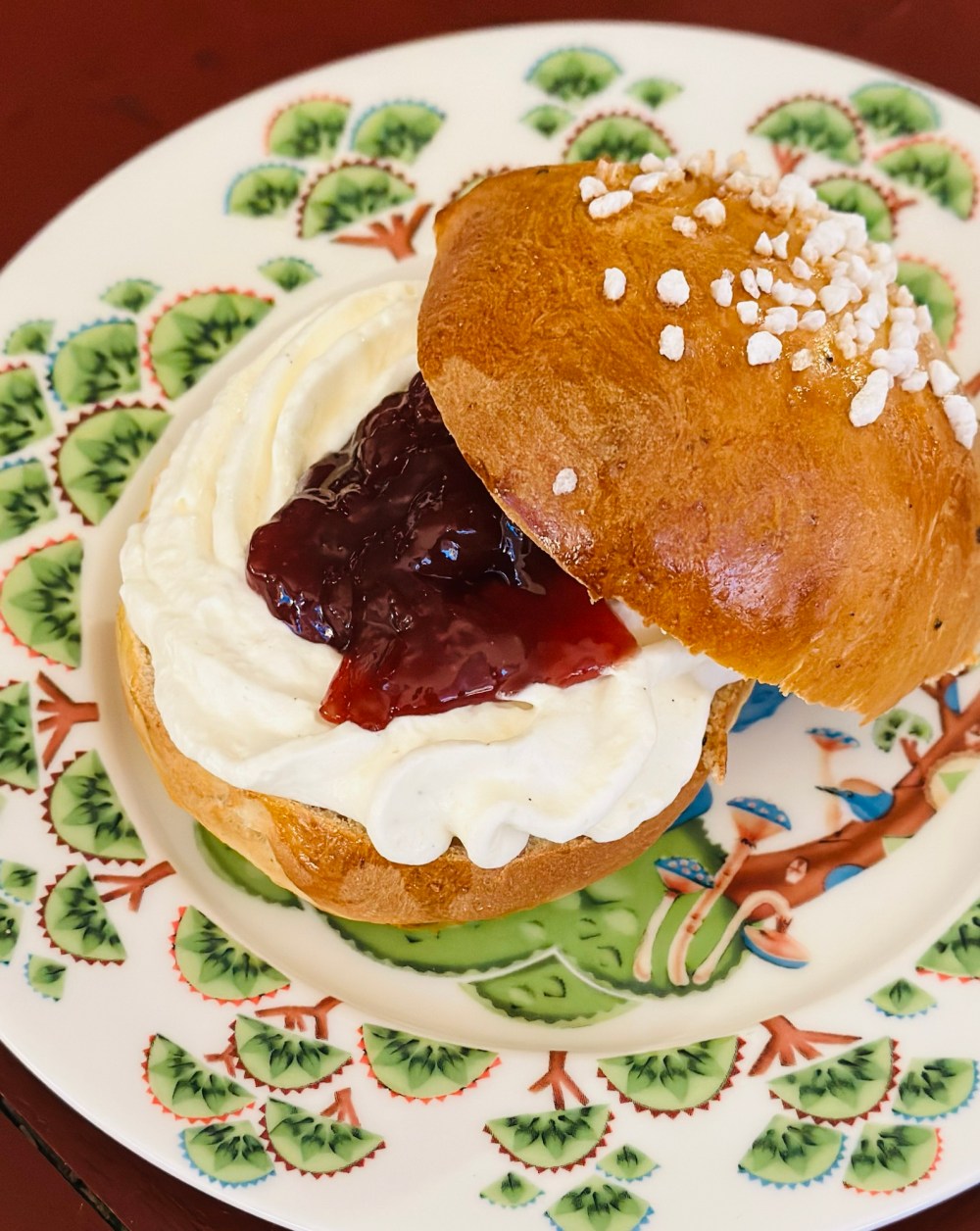
Laskiainen, Shrovetide, is a mid-winter festival in Finland. It originally marked the beginning of the 40-day-long Easter fast practiced among the Catholics and the Orthodox Christians. It is celebrated in Nordic countries in different ways. Here are some traditions from Finland:
The sauna is related to all Finnish events, and Shrovetide makes no exception. In the olden days, talking much in the Shrovetide was not advisable- sauna or flies and mosquitos would bring you and your stock problems in the summer to come. Also, if men were the first ones to take a sauna, that would predict bull-calfs, but if women were faster, the cows of the household would give birth to cow-calfs. If a family took a Shrovetide sauna early in the evening, it was guaranteed that they’d never be late from work or in a hurry for the whole year.
Sliding down the snow-covered hills has been fun for the whole family. Good luck and a good harvest were most likely to follow you if you shouted at the top of your lungs while tobogganing, “Long flax, fine hemp, and turnips of the size of a plate!” In the old agrarian days, a whole village would attend tobogganing events. It was believed that the further your sled would slide, the taller the flax and the bigger the turnips would grow that year.
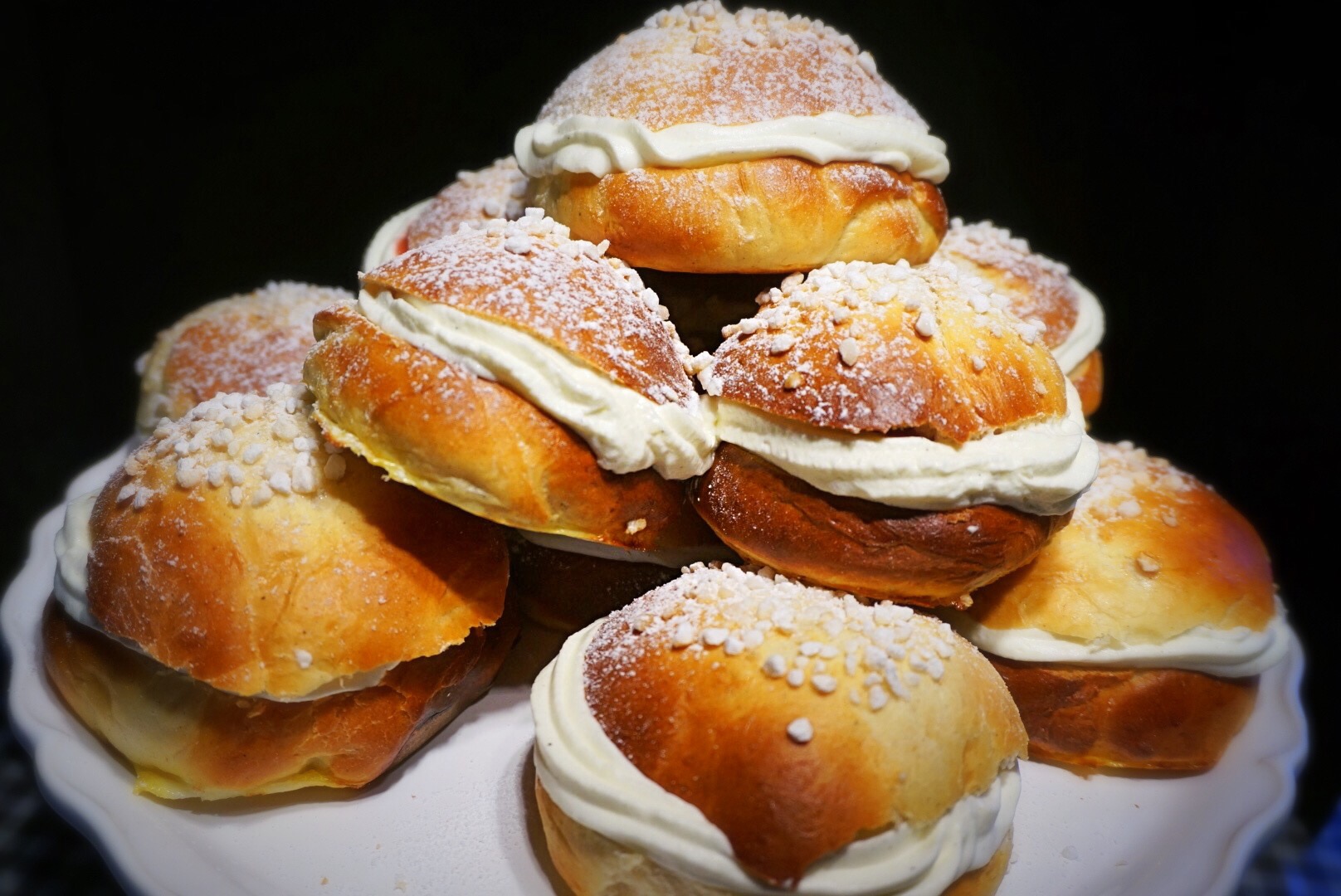
Nowadays, Shrovetide is more of a secular festival, maybe a time to spend outdoors with friends and family. To enjoy unique Shrovetide dishes. The treat, laskiaispulla, Shrovetide bun, or brioche, crowns the day in the most delicious fashion. As a main course, Finnish split pea soup is very often served. These two together are one of my favorite childhood memories. A day spent outside with friends sliding on slopes and then coming inside and eating a bowl of steaming soup and, as dessert, laskiaspulla.
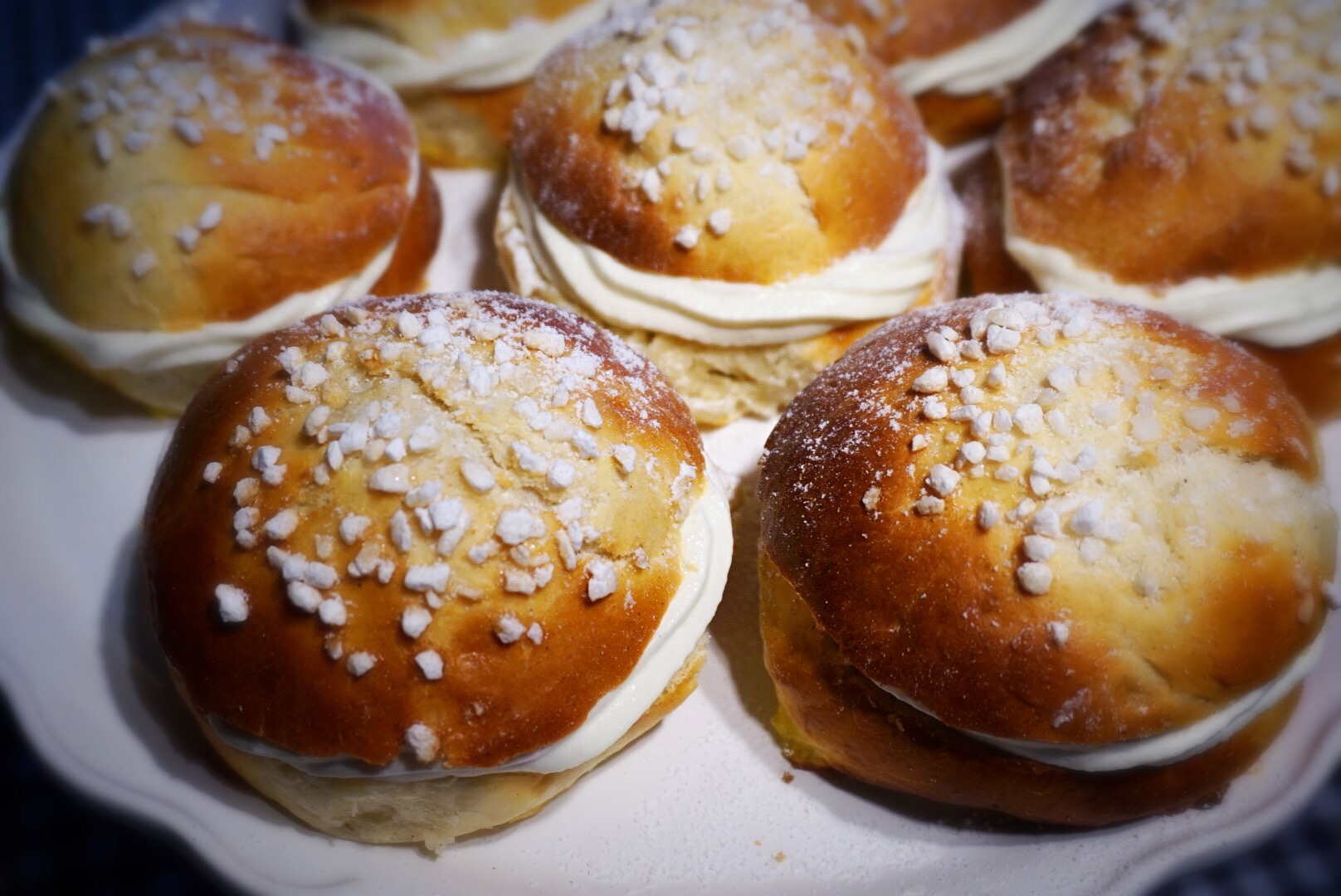
Shrovetide bun or brioche is filled with whipped cream, strawberry jam, or almond paste, which is a bit similar to marzipan. Heated discussions, which are the right and the best, occur among family members and friends every year. Are you team marzipan or team jam? I am definitely a team jam! You may also get creative with your fillings. I made one year Nutella whipped cream and used raspberry jam and raspberries in filling. What ever you like!
This is my favorite pulla dough recipe. It’s an excellent basic recipe also if you are making cinnamon buns “korvapuusti” and for donuts.
24 buns = 2 baking sheets
NOTE! If you need only half the batch, use the counter above and read the tips section for more details.
Dough
Ingredients:
- 5 dl milk
- 1.5-2 dl sugar**)
- 1.5 tsp salt
- 1-1.5 tbsp cardamom
- 13-14 dl semi-coarse wheat flour
- 2 packets (11 g each) dry yeast (OR 1 packet = 50 g fresh yeast crumbled)*)
- 100-150 g room temperature butter OR 1-1.5 dl liquid fat (less for deep-fried donuts, more for oven-baked buns)
- pearl sugar
*) 50 g fresh yeast equals 2 packets of dry yeast. **) The amount of sugar can be adjusted by half a deciliter either way, depending on what you are baking. You can reduce the sugar to 1 ½ dl if you make cinnamon rolls. For small round buns, the amount can be as much as 2 ½ dl.
Instructions:
- Melt the butter in a saucepan or microwave.
- Warm the milk to body temperature (37 degrees Celsius). If using dry yeast, the recommended milk temperature is 42 degrees Celsius. Note! Do not destroy the dough with too hot milk! Too lukewarm liquid is a lesser evil, as you can make the buns even with cold milk – just expect a longer rising time.
- Measure all the ingredients into the bowl of a stand mixer fitted with a dough hook.
- Start with less flour, adding a little more if needed towards the end of kneading. Knead the dough at the lowest speed of the stand mixer for 25-30 minutes. The dough is ready when it no longer sticks to your fingers and can be stretched into an almost transparent “window.” Gluten development contributes to the dough’s workability and rising.
- Cover the dough bowl with a cloth and let it rise in a warm place for about 45 minutes until it has doubled. A microwave or cold oven is a good, draft-free place for rising.
- Scrape the dough onto a floured surface and divide it into two parts for easier handling. Shape each half into a log and cut it into equal pieces (about 12 pieces per half: first in half, then halves in half, and so on). Important! Do not use too much flour on the table, as a dough with too much flour is difficult to shape into beautiful and even buns.
- Roll the pieces into buns between your hands or against the table. Place the buns on a baking sheet lined with parchment paper.
- Let the buns rise covered with cloth for at least 30 minutes. The longer, the better and more airy your buns will be. I let mine rise for at least 45 minutes.
- Baking:
- Small buns or cinnamon rolls: Bake at 225 degrees Celsius on the middle shelf for about 10-15 minutes.
- Larger buns: Bake at 200 degrees Celsius on the middle shelf for about 15-20 minutes.
- Loaves: Bake at 200 degrees Celsius on the lower or middle shelf for about 25 minutes.
- Donuts: Fry in oil at 180 degrees Celsius for about 2 minutes per side.
Tips:
- The softer you leave the dough = the less flour you use, the softer the buns will be. Proper gluten development is crucial.
- If making sugar-filled (korvapuusti) or frosted buns, you can use less sugar in the dough. For basic round buns, you can use a larger amount of sugar.
To assemble the Laskiaispulla:
Cut the tops of the buns (a “lid”) and, using a small spoon, scoop off a bit from inside the bun. Fill the cavity with a spoonful of jam and the crumbs, and top with the whipped cream. Or alternatively, put a slice of marzipan in the cavity. Close with the “lid.” Dust with icing sugar if desired.
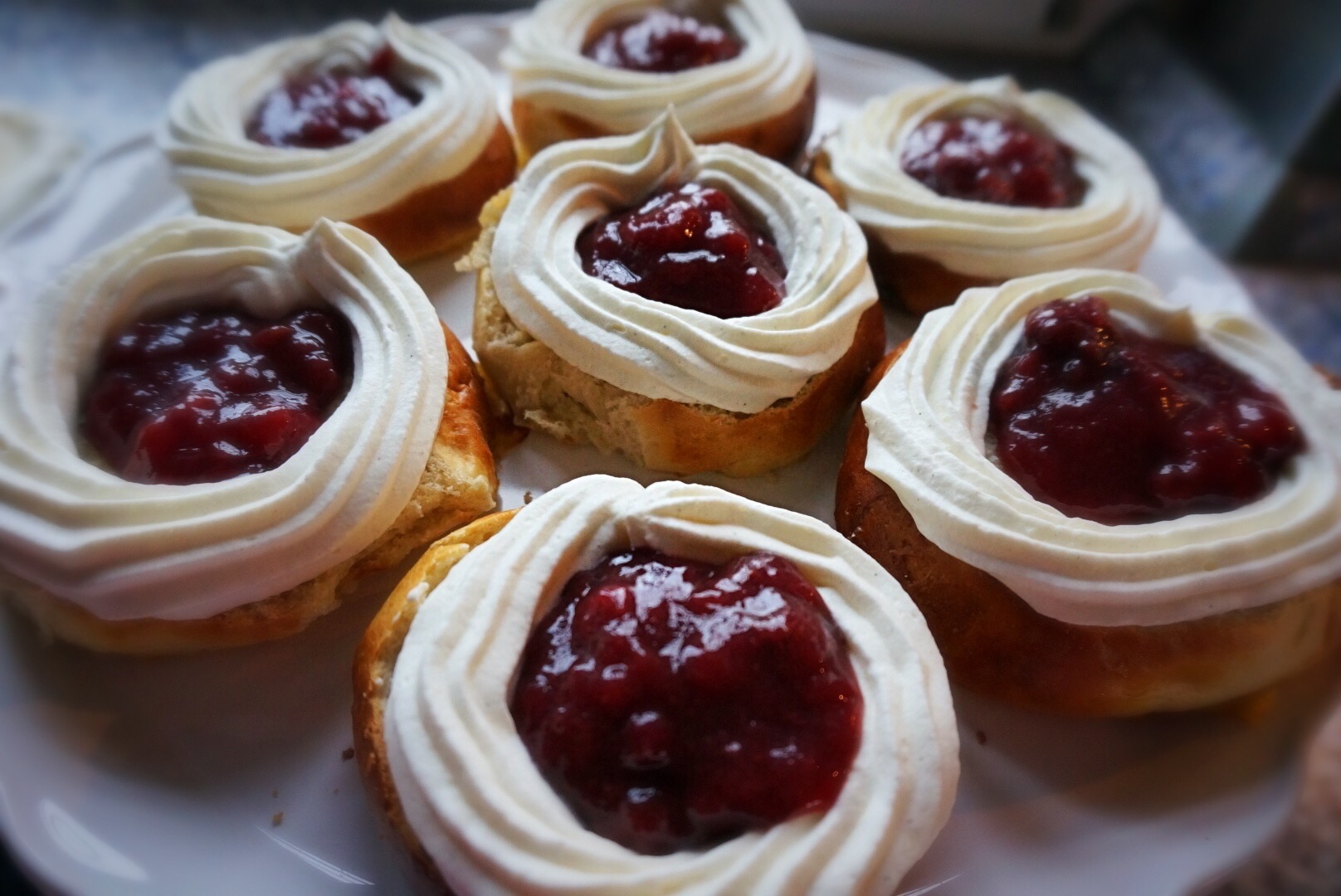
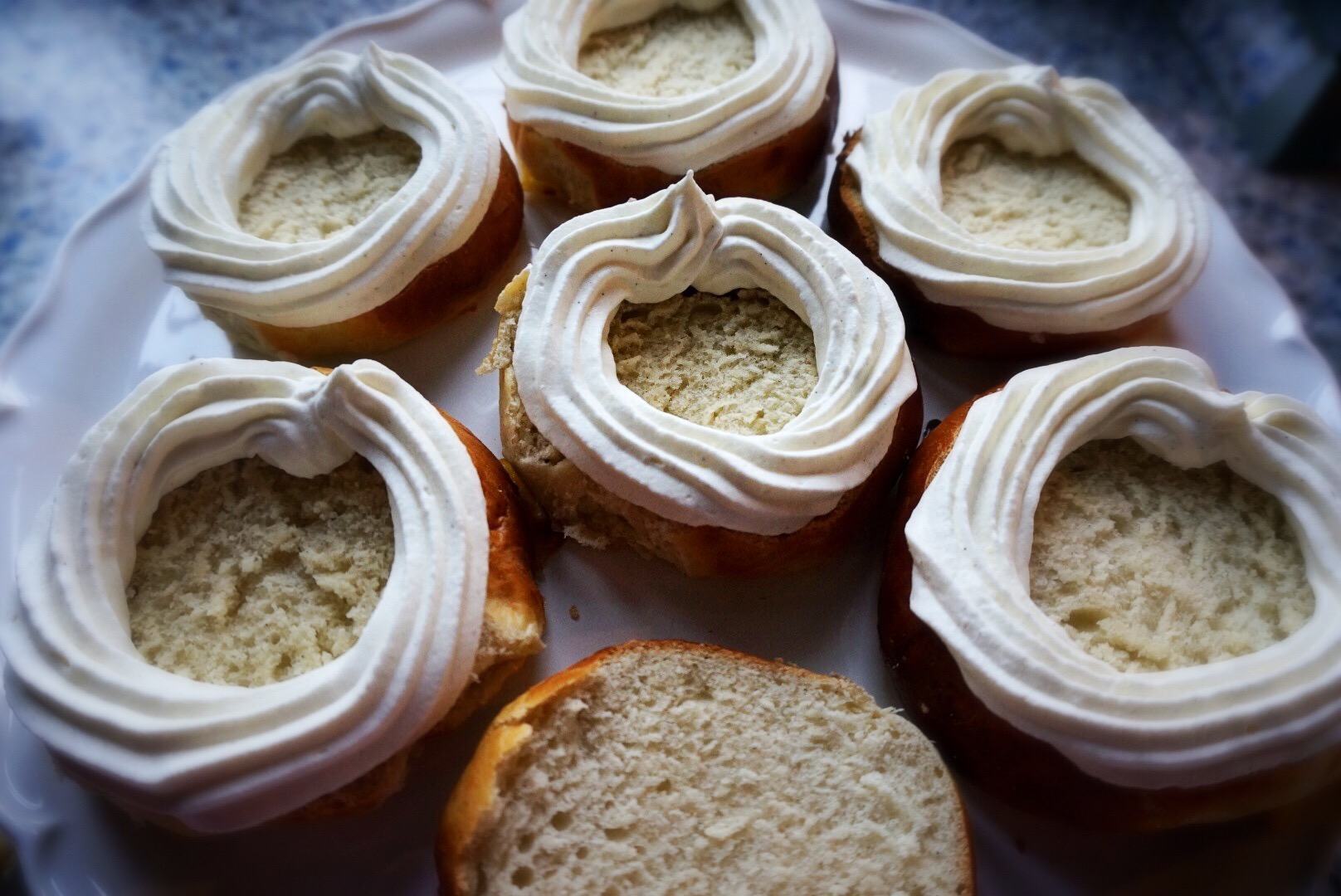 Have a nice Shrovetide ! Some people enjoy their laskiaspulla with hot milk poured on a deep plate and pulla soaked in milk. Yummy!
 frommygardenintomykitchen.com
One Comment Add yours